
Industrial Paddle Mixers
Controlled mixing for powders, granules and particle-sensitive blends.
Start with particle integrity, ingredient distribution and the way your material moves.
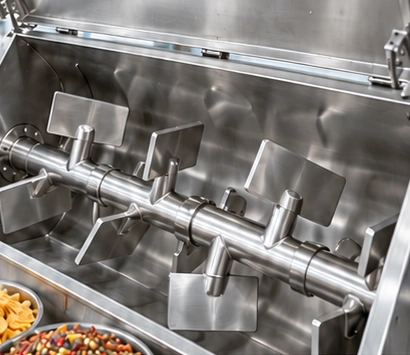
How a paddle mixer works.
Pitched paddles lift, turn and redistribute material through the mixing chamber. Agitator geometry, speed and loading determine the balance between mixing intensity and particle preservation. Confirm the required result with your formulation.
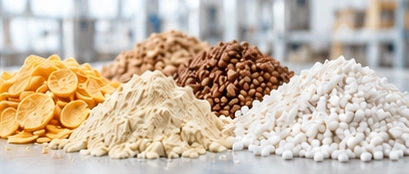
Where paddle mixing fits.
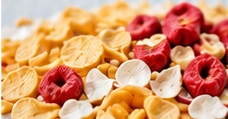
Fragile ingredients
Evaluate particle breakage alongside blend uniformity.
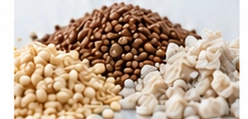
Granular blends
Review differences in size, shape and bulk density.
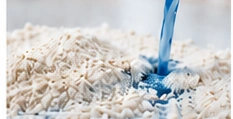
Controlled liquid addition
Discuss wetting, coating and the risk of lump formation.
Build the specification around the product.
Single-shaft and twin-shaft configurations have different mixing characteristics. Select the arrangement against the actual application.
01
Working batch & fill level
Match batch size to the mixing action and target result.
02
Paddle arrangement & speed
Define blade type, quantity and operating speed.
03
Access, seals & cleanability
Specify access, seals and cleaning method for your process and product.
04
Outlet & downstream transfer
Consider discharge type and integration with downstream equipment.
Paddle mixing with temperature control or vacuum.
Paddle mixer configurations with heating and cooling jackets, as well as vacuum processing, are available through QuantumX. Define your temperature range, vacuum duty, vapor handling and required endpoint as part of the specification.

Paddle mixer questions.
Is a paddle mixer always gentler than a ribbon mixer?
No. Product damage depends on the material, blade design, operating speed and cycle. Compare the result for your formulation.
Can different densities be blended?
They can be evaluated, but loading sequence, fill level and segregation during discharge matter.
Paddle mixer photo gallery
Protect the product. Define the blend.
Share your material, batch size and target result. Our team will review your application.